
Setting the Table for Citizen Diplomacy
For more than fifty years, Global Ties Kalamazoo has connected southwest Michigan with visitors from around the world through exchange programs rooted in citizen diplomacy. One of the most personal ways that mission comes to life is through Dinner Diplomacy, where local residents welcome international guests into their homes for a meal and conversation that can change perspectives on both sides of the table.
If hosting international guests sounds meaningful but slightly intimidating, longtime volunteers Amy Remmert and Susan and David Thoms offer a reassuring message: a successful evening does not depend on a perfect menu or a picture-perfect home. It depends on warmth, curiosity, and the willingness to show guests what everyday life in Kalamazoo really looks like.
“Don’t let it stress you out.... Make it real.”
Preparing to Host
Amy Remmert remembers that her biggest worry before her first dinner was simple: the cooking. She recalls making lasagna because it felt manageable and reminding herself that she was not trying to create a glamorous meal, only to offer an honest picture of home life.
That instinct is echoed by Susan Thoms, who has spent years welcoming both local and international guests into her home and keeping careful records of what she serves, what people enjoy, and what dietary needs she should remember for next time. Susan said her first Global Ties dinner, in August 2017, involved Palestinian pharmacists and her first experience planning around halal food, which meant learning where to shop and how to prepare a meal that felt both thoughtful and comfortable.
Together, their stories suggest a few practical ways to prepare:
Choose a meal you already know how to make well, rather than experimenting under pressure.
Ask about dietary restrictions in advance and treat them as a helpful planning detail, not a barrier.
Focus on making guests feel at ease, not on impressing them.
Amy puts it plainly: “Don’t let it stress you out. Consider it doing a gathering of family. Make it real.” She encourages hosts to skip the pressure to “go over the top” and instead offer “a nice home-cooked meal,” because that is what guests often remember most.
Hospitality Over Perfection
For Susan and David Thoms, hosting is an extension of a life already shaped by entertaining, travel, and curiosity about other parts of the world. Susan studied in Germany during her junior year abroad at Kalamazoo College, David studied in France, and together they built a home where dinner parties and overnight guests became a regular part of life long before they started hosting with Global Ties Kalamazoo.
That background helps explain why Susan did not describe herself as nervous about hosting international visitors. Instead, she said the opportunity sounded “intriguing,” and her reaction was essentially: they already loved to cook and host, so “why not host an international party?”
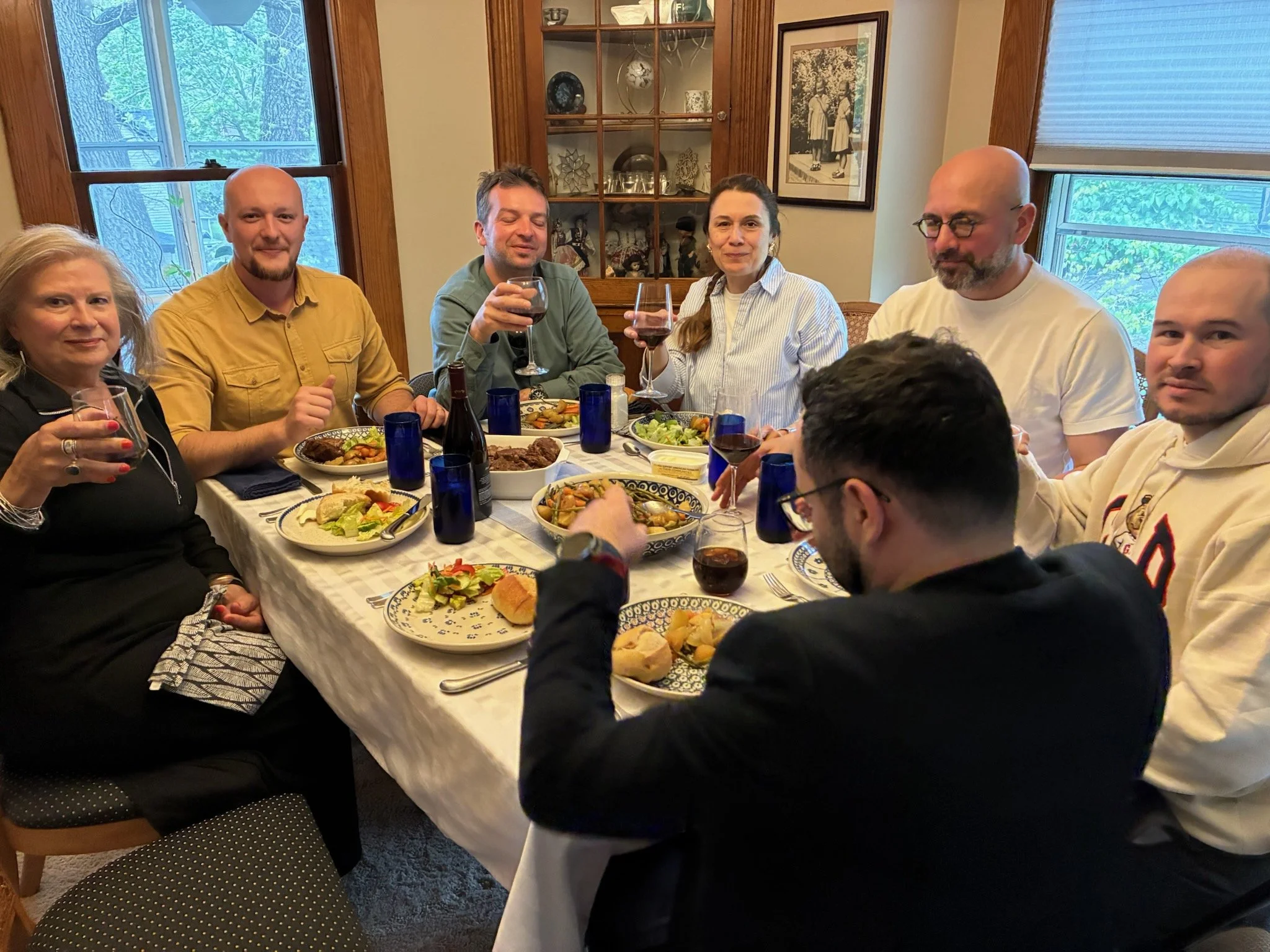
Their approach also shows that hospitality can take many forms. Susan cooks, while David “sets a beautiful table,” and together they create an environment that feels intentional without becoming stiff or formal. Susan noted that other hosts may do things differently, even using paper plates, and still offer meaningful hospitality, because what matters most is enjoying “having people around and feeding them.”
How to Prepare Well
The strongest practical advice from Amy and Susan is to prepare for conversation as much as for dinner. Susan said she tries to learn guests’ names ahead of time and look up their countries if they are unfamiliar, especially so she can enter the evening with a little context and a few informed questions.
That kind of preparation does not require expertise. It simply signals respect. Susan described looking up places like Bahrain and Burundi on a map and doing a little background reading before a group arrived, while Amy emphasized that much of the evening naturally unfolds through open conversation about work, family, culture, and daily life.
A practical host checklist drawn from their interviews might include:
Learn how to pronounce guests’ names and know where they are from. Read a little about their countries or professional focus before they arrive.
Plan a meal that leaves you free to sit down and participate in the conversation.
Expect an authentic exchange, not a performance, with room for laughter, questions, and unexpected common ground.
What Guests Remember
Amy’s hosting stories are filled with small details that reveal how meaningful a simple evening can become. In one memorable dinner with visitors from Belarus, her Belarusian boss joined the group and insisted that “Belarusians love martinis,” sending Amy out to buy a shaker and all the fixings so the night would feel festive and familiar.
Susan and David Thoms tell similarly vivid stories. Their first group of Palestinian pharmacists challenged assumptions they had absorbed from the news, especially when they learned about the scale of universities in the West Bank, the work of women pharmacists, and the professional life of visitors whose daily realities were much richer and more complex than they had imagined. David said one of the most fascinating parts of hosting is watching “our preconceived notions shattered,” while Susan said those conversations reshaped her mental map of the world.
For Susan, another surprise was how often guests arrived carrying gifts from home despite having traveled thousands of miles. She said that gesture touched her deeply, and over time those gifts became lasting reminders that these dinners are not one-way acts of hospitality, but mutual exchanges of generosity and care.
Why Hosting Matters Now
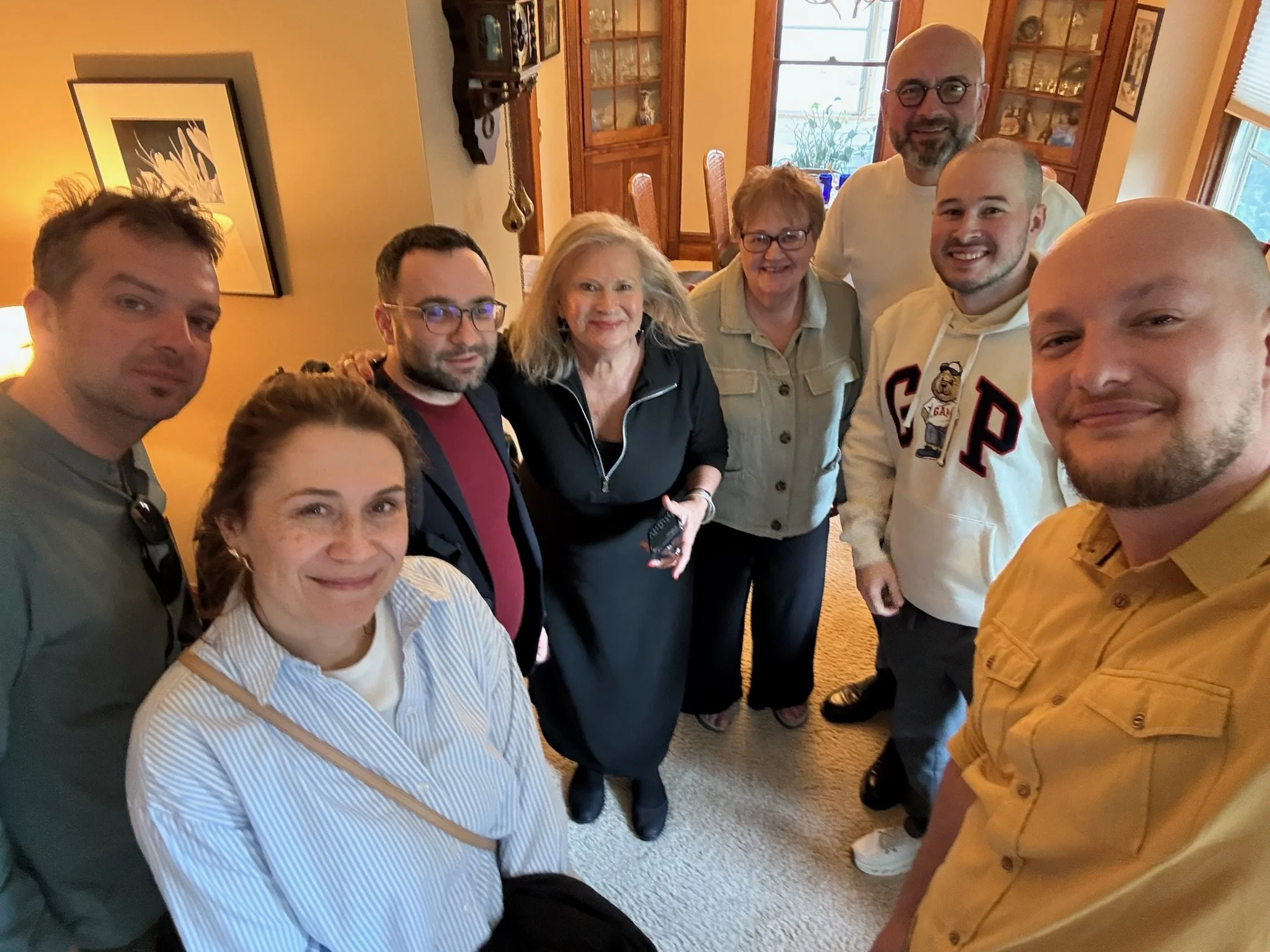
Both Amy and the Thoms family describe hosting as a way to step outside the narrow version of the world offered by headlines. Amy says visitors help reveal that people everywhere are “just normal people,” while Susan reflected on the remarkable experience of having “a table full of people from five different countries and everybody’s getting along just fine.”
That is part of why the program matters so much right now. Amy said there is “so much hate in the world” and so much conflict that programs like those offered through Global Ties Kalamazoo help restore a needed “human to human perspective.” Susan and David reached a similar conclusion through years of hosting: people learn from one another quickly when they are seated together in a home, sharing food and stories rather than stereotypes.
David summed up the experience in two words: “Curious and fun.”
Ready to Set the Table?
For prospective volunteers, the example set by Amy Remmert and Susan and David Thoms is encouraging. You do not need to be an expert in world affairs, an adventurous chef, or a perfectly polished entertainer to be a meaningful host.
You do need to be open, prepared to listen, and willing to welcome someone into your home with kindness. That is the heart of Dinner Diplomacy, and it is one of the ways Global Ties Kalamazoo continues connecting Kalamazoo to the world, one relationship at a time.
If you have ever wondered how you can make a global difference close to home, becoming a dinner host is a meaningful place to start. A shared meal can spark conversation, challenge assumptions, build friendship, and remind all of us that international understanding often begins with ordinary people gathered around a table. Host a Dinner Diplomacy evening with Global Ties Kalamazoo and help turn a shared meal into connection, conversation, and citizen diplomacy.