
Madeline Isch has lost count of how many Global Ties Kalamazoo groups she has walked through the Groves Campus of Kalamazoo Valley Community College. "I think it's been upwards of 10 at this point, but I'm honestly not sure."
She doesn't think her start was much of a story. For as long as she has worked at the Groves, Jodi from Global Ties Kalamazoo has been reaching out to ask for meetings and tours. Over time, Madeline became the person with the capacity and the availability, and the tours became hers.
But the tours have given her something back.
A building most people don’t know exists
Madeline is Associate Director of Corporate Training at KVCC, where her team creates what she calls "demand-driven workforce development trainings for business customers." In practice, that means teaching workers at partner companies the specific skills employers need. Much of that work is with small and mid-sized manufacturers. "I often tell our customers you name it we build it," she says.
The Groves is KVCC's workforce-focused campus, home to academies like the Wind Turbine Technician Academy, technical and manufacturing labs, and short courses often sponsored by employers. When people ask who the typical student is, "I often tell them it literally could be anybody."
Madeline grew up in Kalamazoo and had even taken classes at KVCC, yet she didn't know the Groves existed until she started working there in 2021. On her first tour, "I was in awe of what we had available to us, like genuinely."
Visitors tend to react the same way. "I often say that it's Kalamazoo's best kept secret," she says. "We want people to know what's available."
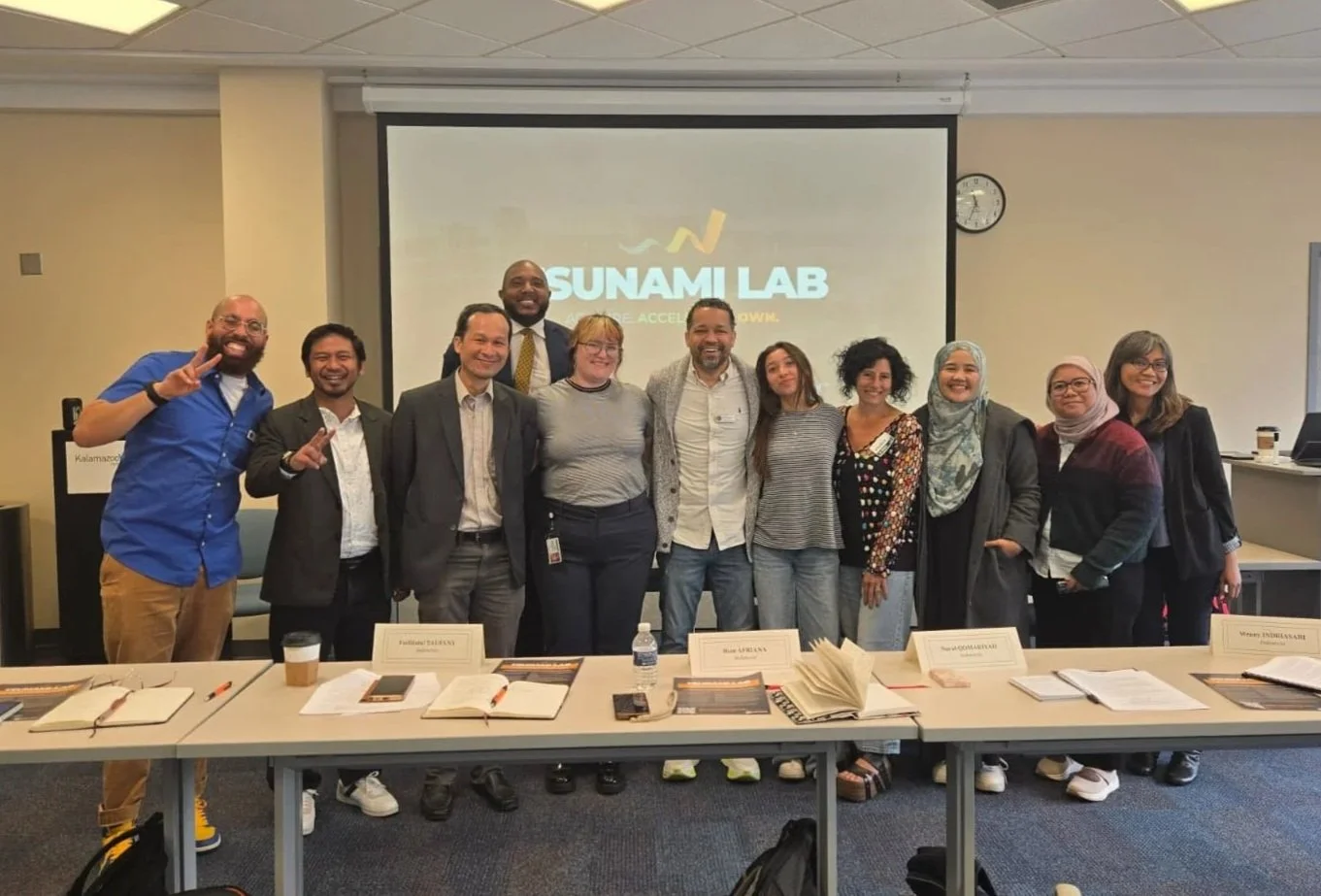
Members of Kalamazoo Forward Ventures, Madeline Isch (center), Jodi Michaels (Executive Director of Global Ties Kalamazoo) and an IVLP group: Driving Innovation Through Academic Partnerships, A Project for Indonesia in April 2026. More on this program below.
"We could never have this in our country"
International visitors don't usually meet Kalamazoo's workforce directly. They meet the system that trains it. Two things stand out on nearly every tour.
The first is the resources: the equipment and the lab spaces Madeline admits she takes for granted. "Almost every single tour that we have, I'll hear people say, you know, we could never have this in our country."
The second is how closely employers work with educators here. Visitors are often surprised that employers have donated equipment for students to train on and that they sit at the table to help decide how the workforce gets educated. Madeline is surprised in turn. "I don't know how they do what they do without that employer feedback. It's so core to everything that we do."
Visitors have described similar partnerships in their own countries, she notes. What surprises them is how strong the collaboration is here. She gives some of the credit to Kalamazoo itself. "I think also our community is really good at this, just to be real."
On her most recent visit day, she hosted two different IVLP (International Visitor Leadership Program) groups, the second of which was from ten countries in Africa. One of the visitors told her their country is very capitalistic. "I was like, ‘More capitalistic than the United States?’" The visitor was reacting to the employer-donated equipment, something she said people back home would never do. For Madeline, it reaffirmed KVCC's approach.
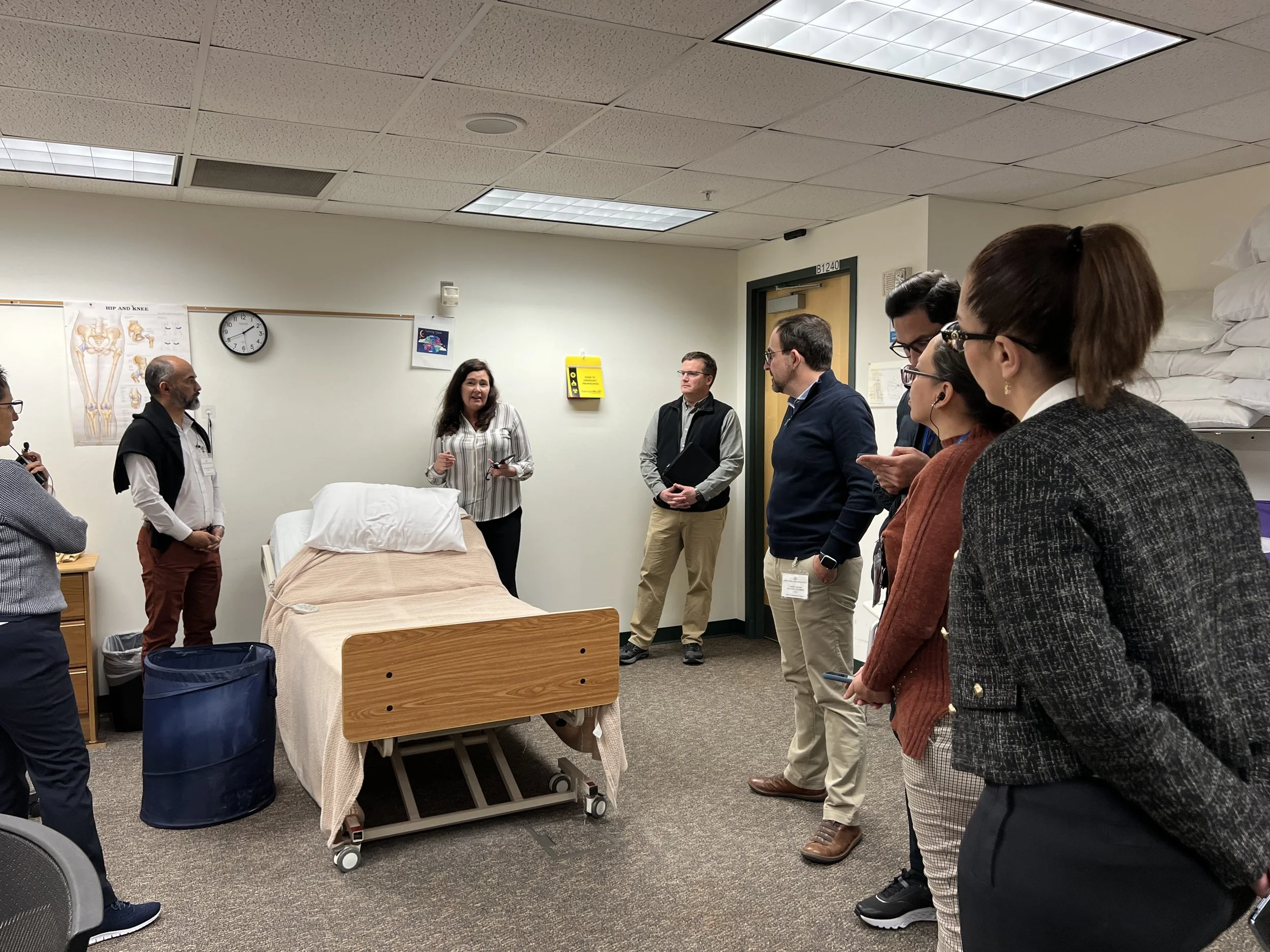
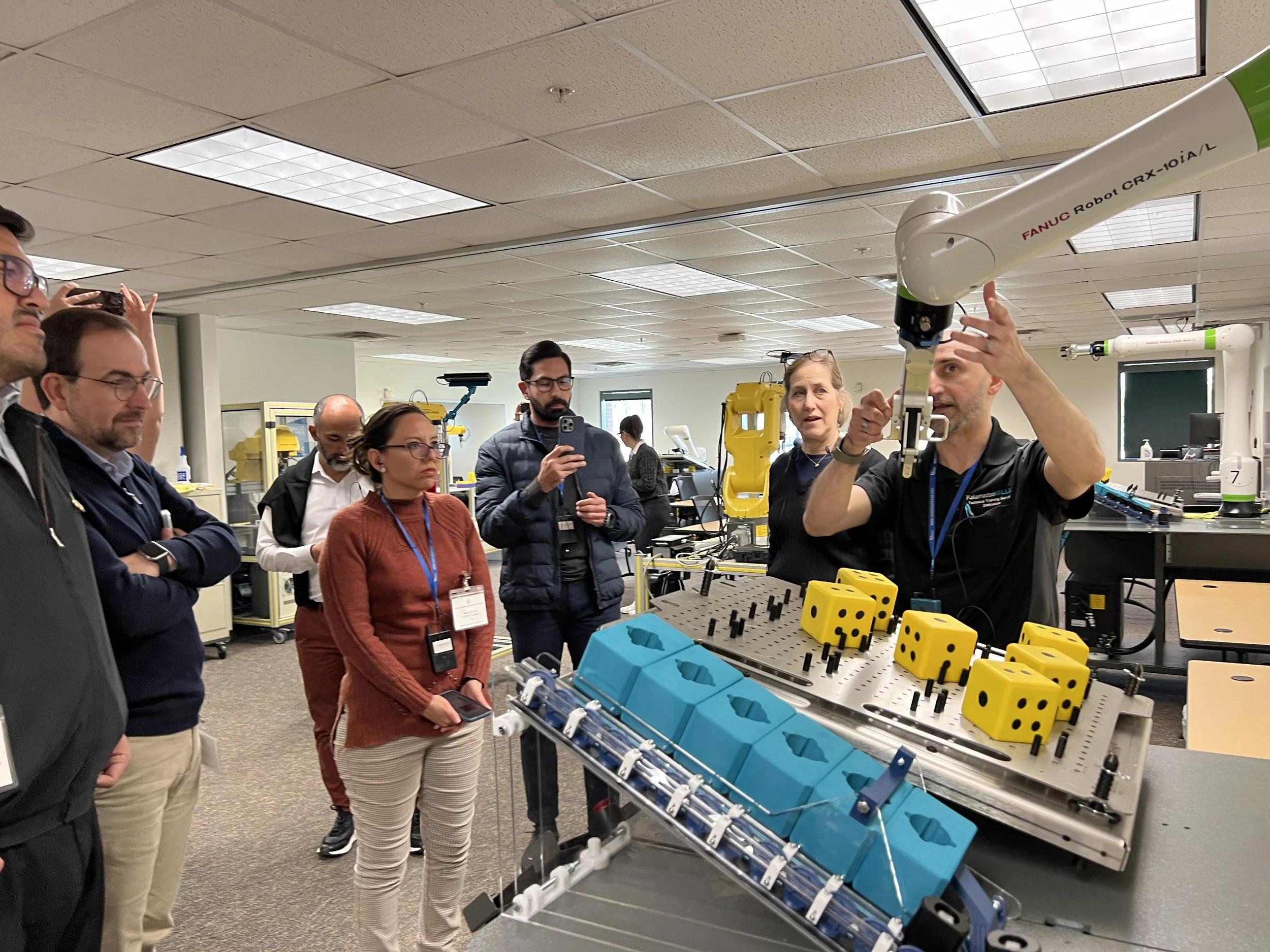
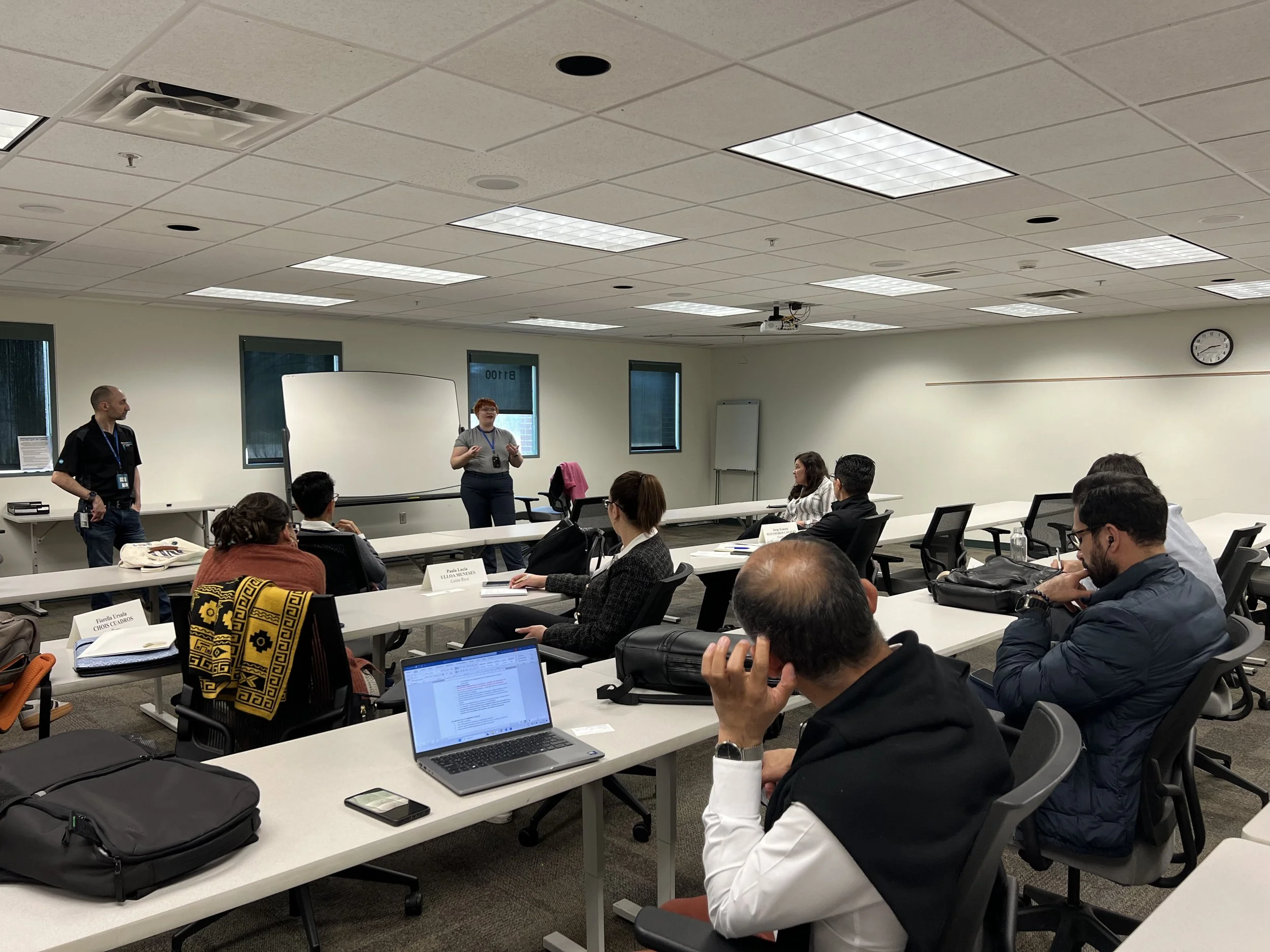
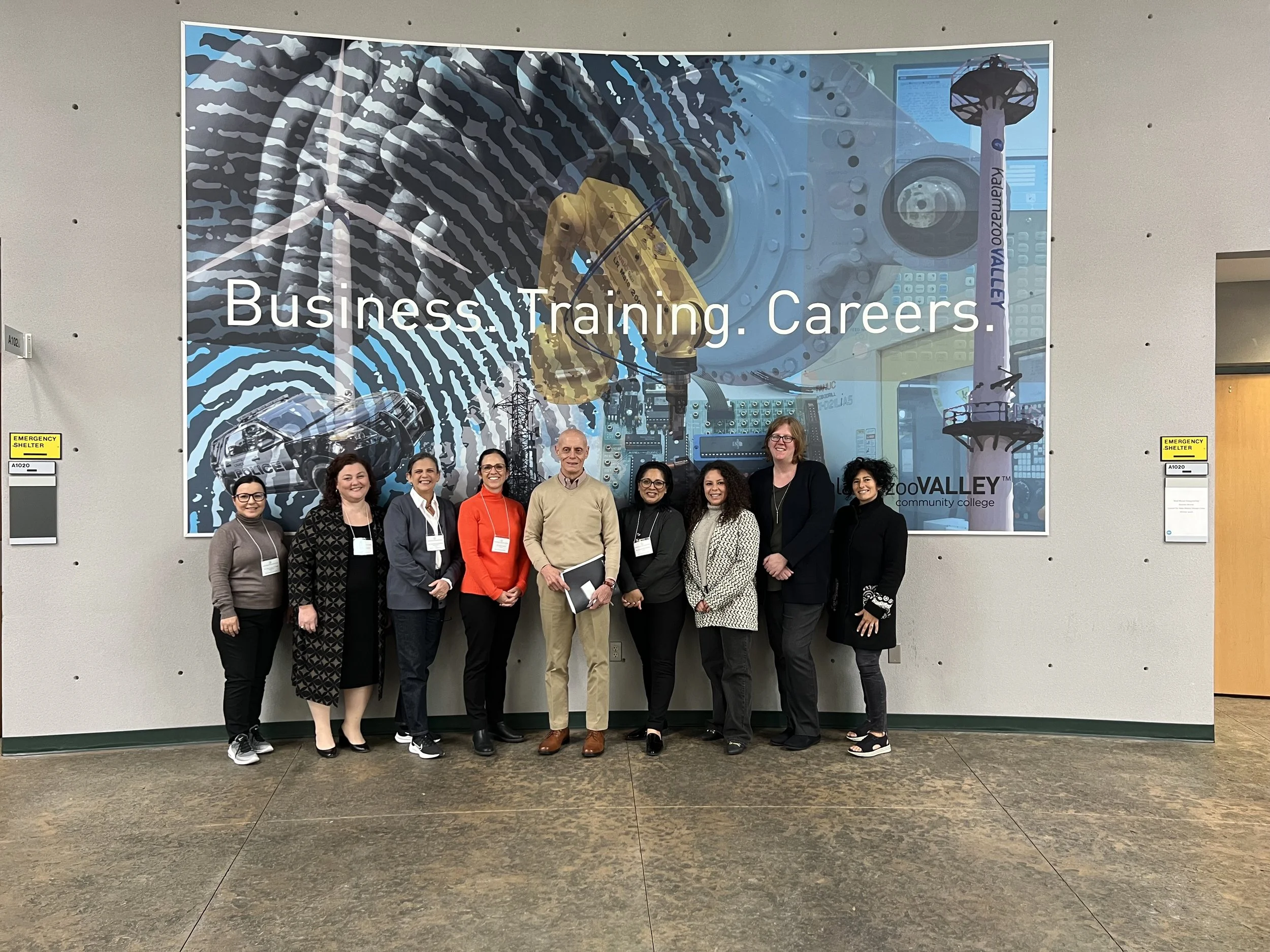
KVCC’s partnership with Global Ties Kalamazoo has spanned years. Pictured above, now retired former Vice President, Strategic and Economic Development at KVCC, Craig Jbara, also met with international visitors in the program.
Better questions
Asked to finish the sentence "Global Ties Kalamazoo helps me do my job better because…," Madeline didn't hesitate. "It gives unique perspective and it helps me ask better questions."
That perspective matters, she says, because every country has its own way of doing things. "There's like a tendency to believe that our way is the right way. And I think that maybe isn't just an American problem. I think that's probably just like the human problem: if you've only been exposed to a certain way of doing things, then you're going [to] think that's the right way."
On a recent tour, visitors from the Near East and North Africa asked about KVCC's construction program. Was it training people to build smaller houses or large apartment buildings? The program is still developing, but the question opened a conversation about the American dream of a house with a yard, and why the biggest local shortage is in residential contractors. Afterward, Madeline found herself asking new questions about housing suited to population density and to challenges like transportation. "[I]t just helps you see how your work is very interconnected," she says, and it points to "solutions that folks in other parts of the world maybe think of automatically."
The visits also energize her. Visitors "really remind me that we are so much more similar than we are different," she says. "It's so interesting and energizing to be around people who are from all over the world doing very similar work to what I'm doing."
“Global Ties Kalamazoo helps me do my job better because it gives unique perspective and it helps me ask better questions.”
What visitors want to know
Most visitors want the process: how KVCC conducts needs analysis, develops curriculum, assesses demand, and gets students employed. Those are the pieces they can take home.
That was true when a group from Eastern Europe, including Ukraine and Georgia, learned about Tsunami Lab. Kalamazoo Forward Ventures created the entrepreneurship accelerator in response to the "silver tsunami," the wave of baby boomer business owners reaching retirement, often without a succession plan. They also saw a gap in business ownership in Kalamazoo: the share of Black-owned businesses doesn't match the share of Black residents. Madeline is clear that it was "100% their idea." KVCC audited and accredited the curriculum and provided the space through a contract training partnership.
What interested the visitors most was the partnership itself. Kalamazoo Forward Ventures didn't just bring an idea. It funded the program and its participants. "It's frequent that a business comes to us with an idea to solve a problem," Madeline says. "It is less frequent that they come to us with their wallet open and ready to help."
Relationships without an agenda
Madeline is frank that Global Ties Kalamazoo visits haven’t produced training contracts or projects for KVCC, "at least not yet." It's "not our core mandate to necessarily work globally, right? We're working in the community."
So why say yes? Part of the answer is stewardship, one of KVCC's core values. To her, it means "we should be sharing our resources, sharing our knowledge, and making that available for others." Part of it is how she builds relationships: "it starts with being a person who is wondering what someone else needs from you instead of trying to get your needs met first."
That approach paid off in a way she didn't expect. For one Global Ties Kalamazoo visit, she brought together a panel of local partners working on youth-focused programs, including employers and Comstock Compass High School. Several of them had never met each other. After speaking to the visitors, they exchanged contacts, and she knows some followed up. "[T]hat was kind of an unexpected side effect, but it was really cool."
As she puts it, "you really never know when you're going to need a connection that you made."